
Reviewed · SAUDI ARABIA
Kiswah Factory Tour From Makkah (Mecca)
A sacred cloth takes a year to make. This private Makkah tour combines a close look at the Kaaba’s Kiswah with a visit to Al Hudaibiya, where a major peace treaty was agreed. I like the chance to see the gold-thread embroidery and weaving up close, and I like that private transportation is included for up to four people. The main caution is timing: the pickup and visit hours may shift with factory access and driver availability.
The tour lasts about two to three hours, including transport, so it fits neatly into a busy stay in Makkah. The factory visit is the main event, while Al Hudaibiya adds religious and historical context. The site itself may be more modest than some first-time visitors expect, and a hands-on stitching activity is not guaranteed.
In This Review
- Key things to know before booking
- Why the Kiswah Factory is the heart of the tour
- What you will see inside the factory
- Al Hudaibiya and the meaning of the treaty
- Transport, timing, and the private format
- Is $104 good value for four people?
- Who will enjoy this Makkah outing most?
- Practical advice for making the most of the visit
- Should you book the Kiswah Factory Tour?
- FAQ
- How much does the Kiswah Factory Tour cost?
- How long does the tour take?
- Is pickup included?
- How long is the Kiswah Factory visit?
- How long is the Al Hudaibiya visit?
- Is admission to both sites included?
- Is this a private tour?
- Can I cancel for a full refund?
- Are personal expenses and gratuity included?
Key things to know before booking
- The Kiswah is replaced each year: Production supports the new covering used on the Kaaba on the 9th day of Dhul-Hijjah.
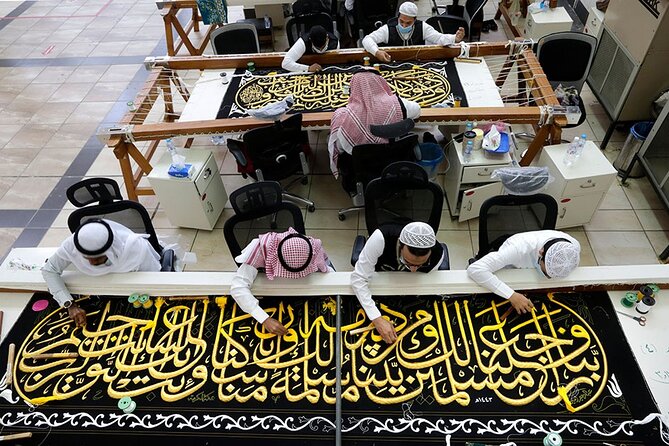
- The factory visit takes about 90 minutes: You see design, dyeing, weaving, embroidery, and gold and silver threadwork.
- Al Hudaibiya adds a major Islamic history stop: The treaty was agreed there in 628 CE, during the sixth year after the Hijrah.
- The price covers a private group: The listed $104 rate applies to up to four people, making the cost more attractive when shared.
- Your schedule may change: Factory visiting hours and driver availability can affect the pickup time.
- Transport is included: Personal spending and gratuity are separate, while the booking provides a mobile ticket and pickup service.
Why the Kiswah Factory is the heart of the tour
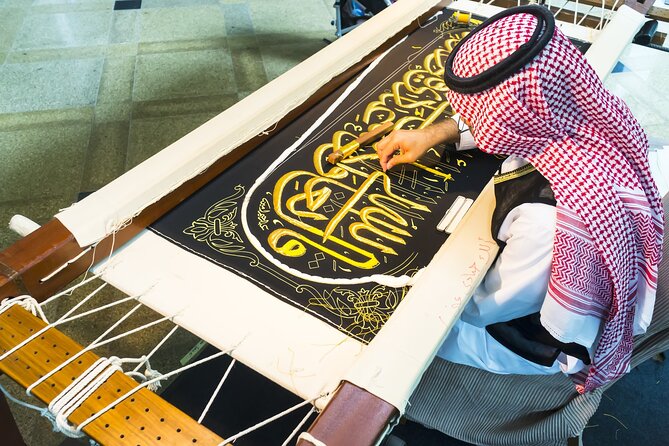
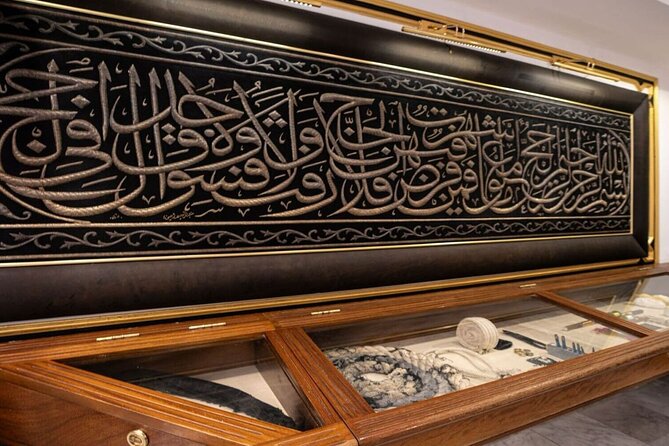
The Kiswah Factory gives you something that a visit to the Grand Mosque alone cannot provide: a look at the labor behind one of Islam’s most recognized sacred objects. The Kiswah is the black cloth covering the Kaaba, decorated with Quranic verses in gold and silver thread.
The work is careful and slow. About 200 artisans are employed at the factory, which operates throughout the year. You are not simply looking at a finished cloth behind glass. The visit explains how the Kiswah is designed, dyed, woven, and embroidered before it reaches the Kaaba.
That process gives the tour its value. The black fabric may look simple from a distance, but the lettering and borders require precise work. The gold and silver decoration gives the cloth its formal appearance, while the Quranic verses carry the spiritual meaning.
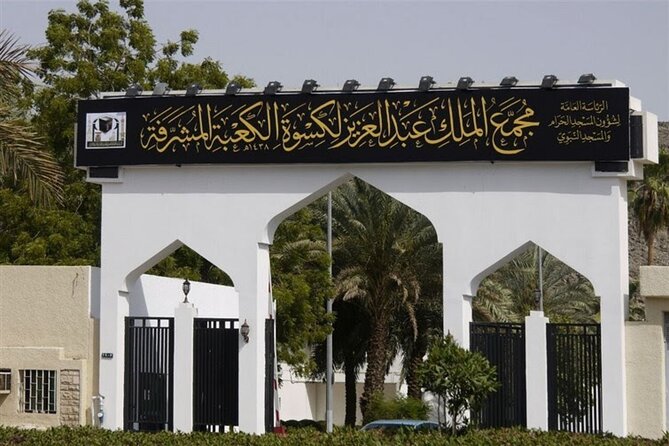
The factory was established in 1927 by King Abdulaziz Al Saud. It is in the Umm Al-Joud area, roughly 10 kilometers from the Grand Mosque. That distance is close enough for a short outing, but your actual time on the road will depend on pickup arrangements and traffic.
I especially like that the factory visit connects modern production with an older tradition. Covering the Kaaba dates back to the pre-Islamic period, and the practice continues today under the care of the Saudi government. You see both continuity and present-day craftsmanship in one place.
The factory portion lasts about an hour and a half. That is enough time for a proper explanation without turning the outing into an all-day commitment. A guide or spokesperson explains the stages clearly, and one strong point of the experience is the quality of the explanation. If you enjoy understanding how an object is made, rather than simply photographing it, this is where the tour earns its keep.
One practical note: do not assume you will personally stitch part of the Kiswah. A hands-on stitching opportunity may not be available. The focus is on observing the craft and learning about the process.
Other trips running from Saudi Arabia the same week:
- Riyadh: Edge Of The World, camels &Stargazing with 4×4
★ 4.7 · 1,050 reviews - Edge of The World Riyadh with Camel Ride ,Bat Cave Visit & Dinner
★ 5.0 · 778 reviews - Edge Of The World Hike(Dinner under stars,village,bats cave,camp)
★ 4.5 · 675 reviews
What you will see inside the factory
The visit follows the Kiswah from raw material to finished decoration. The order may vary, but the key stages include:
- Design: The patterns and Quranic inscriptions are planned before production begins.
- Dyeing: The cloth receives its black color, which forms the familiar base of the covering.
- Weaving: Silk is formed into the large fabric panels needed for the Kiswah.
- Embroidery: Artisans add the lettering and decorative elements by hand and with specialized equipment.
- Gold and silver threadwork: The bright script and borders provide the Kiswah’s most recognizable details.
This is a good place to slow down. The craftsmanship is easy to underestimate when you see only the finished covering at the Kaaba. At the factory, you can appreciate the repeated work, close lettering, and skill needed to produce a cloth of such scale.
The Kiswah is replaced annually on the 9th day of Dhul-Hijjah. That schedule helps explain why the factory must work year-round. It also gives you a clearer sense of the factory as an active place of production, not merely a museum.
A guide’s explanation matters here. The technical steps are interesting, but the religious purpose gives them meaning. You learn why the cloth is made, how the tradition developed, and why the finished object receives such care.
Al Hudaibiya and the meaning of the treaty
The second stop, Al Hudaibiya, takes about 40 minutes and has no admission charge. It is a different kind of visit from the factory. Instead of watching artisans work, you are visiting a place connected with a major agreement between the Muslims of Medina and the Quraysh of Makkah.
The Treaty of Hudaybiyyah was agreed in 628 CE, during the sixth year after the Hijrah. The Prophet Muhammad, peace be upon him, had traveled with about 1,400 companions on a peaceful journey to perform Umrah. The Quraysh prevented them from entering Makkah, leading to negotiations at Hudaybiyyah.
The agreement included a ten-year truce and allowed the Muslims to return the following year for Umrah. Knowing this before you arrive makes the stop more meaningful. You can connect the physical place with the negotiations, patience, and long-term importance of the treaty.
The remains at Al Hudaibiya are not presented as a polished attraction with a long list of facilities. This is a place for reflection, and the quality of the stop depends heavily on the guide’s explanation. The site may feel quiet and spare compared with the Kiswah Factory.
That contrast works well. The factory shows the careful making of a sacred object. Al Hudaibiya brings you to a place where decisions shaped the future of the early Muslim community. One stop is focused on craft, the other on faith, diplomacy, and memory.
The visit is brief, so read or listen to the background before you go. Forty minutes is enough for an introduction and time at the site, but not for an extended historical lecture. A clear guide can make the difference between a meaningful pause and a quick photo stop.
Transport, timing, and the private format
The tour is private, with only your group participating. The price is $104 per group of up to four people, not per person. For four people sharing the ride, that works out to $26 each before any personal costs or gratuity. For one person, the value is less generous, but the private format still gives you a more personal outing than a shared coach tour.
Transportation is included, and pickup is offered. The total duration includes the time spent getting between Makkah, the factory, and Al Hudaibiya. The published estimate is two to three hours, though you should allow some flexibility.
The pickup time may change according to factory visiting hours and driver availability. This is the most important scheduling point. If you have a tightly fixed plan after the tour, avoid placing another time-sensitive activity immediately afterward.
The vehicle experience can also depend on the driver. A clean, comfortable ride and good English from the driver were part of one successful outing, and snacks were provided on that occasion. Treat those extras as possible courtesies rather than guaranteed inclusions, since the formal inclusions specify transportation only.
A mobile ticket makes the booking simple. Confirmation is provided at the time of booking, and the tour is near public transportation, though pickup means you may not need to arrange your own way to the starting point.
Most people can take part. No special ability requirement is listed. Still, the tour involves getting in and out of a vehicle and walking around the factory and historic site, so sensible footwear and modest, comfortable clothing are wise choices.
A longer drive, and a very different landscape:
- Edge of the World with 4×4 vehicles, sunset Dinner and stargazing
★ 4.5 · 567 reviews - Riyadh: Edge Of The World and Bats Cave Tour by 4×4
★ 4.7 · 394 reviews - Edge of The World Riyadh,Camel Ride ,Bat Cave Visit & Dinner
★ 4.6 · 269 reviews - Riyadh Sunset Edge of the World & Deer Reserve 4WD Adventure
★ 4.8 · 186 reviews
Is $104 good value for four people?
The price is easiest to justify when shared. Four people receive private transportation, a factory visit, a guide or spokesperson, and a second historic stop for $104 per group. That is a reasonable package for a short private outing, particularly if you value not having to organize taxis between two separate locations.
The factory admission is included, and Al Hudaibiya has no admission fee. You are mainly paying for transport, coordination, and the guided explanation. The cost is not just an entry ticket, since the factory visit requires access arrangements and a driver.
For two people, the price is still fair if the pickup is convenient and the factory access runs smoothly. For a solo visitor, the cost is harder to compare with a simple taxi ride, but a taxi would not provide the same structured explanation or planned pairing of sites.
Keep a little money aside for personal expenses and gratuity. Those are not included. Snacks may be offered, but food should not be treated as part of the paid package.
The strongest value comes from the combination. A factory-only visit would appeal to craft enthusiasts, while Al Hudaibiya alone might feel short. Together, they create a compact half-day experience with both practical and spiritual interest.
Who will enjoy this Makkah outing most?
I would recommend this tour to anyone who wants a break from the main pilgrimage sites and is curious about how the Kiswah is produced. It suits people who appreciate religious craftsmanship, Islamic history, and guided visits rather than simply ticking off landmarks.
It is also a good choice for families or small groups. The private vehicle allows your group to stay together, and the per-group pricing becomes more attractive with three or four participants.
The tour works well for first-time visitors who want context. You may have seen the Kiswah at the Kaaba, but the factory explains the work behind it. Al Hudaibiya then adds a place tied to an important moment in the life of the early Muslim community.
You may want to reconsider if you need a guaranteed start time, a long visit at each site, or a hands-on workshop. The schedule can change, Al Hudaibiya is brief, and personal stitching is not assured.
The overall rating is 3.8 out of 5 from five recorded ratings. That suggests a generally positive experience, with the main strength being the factory explanation and the main uncertainty being scheduling and access details.
Practical advice for making the most of the visit
Before booking, confirm the expected pickup window. The chosen time may be adjusted to match factory visitor hours, so ask for the latest schedule rather than assuming the displayed time is final.
Plan to listen closely during the factory explanation. The machinery and cloth are interesting, but the meaning of the inscriptions and the annual replacement date add much more to the visit.
If you are hoping to stitch part of the Kiswah, ask before departure. It may not be offered, and the experience is primarily a guided look at the production process.
Allow extra time after the tour. The stated two to three hours includes transport, and road conditions or a changed pickup time could affect your return.
Book at least a few weeks ahead if your dates are fixed. This experience is booked an average of 28 days in advance, which suggests that planning ahead is sensible, especially during busy pilgrimage periods.
Cancellation is flexible if you act early. You can receive a full refund by canceling at least 24 hours before the start time. Changes or cancellations inside that window are not accepted for a refund.
Should you book the Kiswah Factory Tour?
Book it if you want a focused, private experience that explains the making of the Kaaba’s covering and connects it with the treaty site at Al Hudaibiya. The factory is the clear highlight, and the tour is especially good value for a group of up to four.
I would skip it only if your schedule cannot tolerate a changed pickup time, or if you expect a hands-on craft class and a large, fully preserved historic site. For everyone else, this is a thoughtful two to three-hour addition to a Makkah stay, with far more substance than a quick sightseeing drive.
FAQ
How much does the Kiswah Factory Tour cost?
The listed price is $104 per group of up to four people. It is not priced per person.
How long does the tour take?
The full experience takes approximately two to three hours, including transportation.
Is pickup included?
Yes. Pickup is offered, and transportation is included in the tour.
How long is the Kiswah Factory visit?
The factory portion is scheduled for about one hour and 30 minutes.
How long is the Al Hudaibiya visit?
The Al Hudaibiya stop takes about 40 minutes.
Is admission to both sites included?
Admission to the Kiswah Factory is included. Al Hudaibiya has no admission charge.
Is this a private tour?
Yes. Only your group participates in the activity.
Can I cancel for a full refund?
Yes, if you cancel at least 24 hours before the experience start time. Cancellations made less than 24 hours in advance are not refunded.
Are personal expenses and gratuity included?
No. Personal expenses and gratuity are not included in the listed price.
Just listed in Saudi Arabia
- Wadi Al Disah Tour★ 4.1 · 5 reviews
- Wadi Lajab Canyon Hiking Tour★ 5.0 · 2 reviews
- Visit Taif The City of Roses★ 5.0 · 2 reviews
- Discover Taif City★ 5.0 · 4 reviews
- Sawda Mountains Hiking Trail★ 5.0 · 4 reviews
- Historical Landmark in Tabuk Region Full Day Tour★ 5.0 · 2 reviews
- Full day Jabal Al Lawz with Biblical Sites visit★ 5.0 · 2 reviews
- Horse Riding in Khobar★ 5.0 · 2 reviews